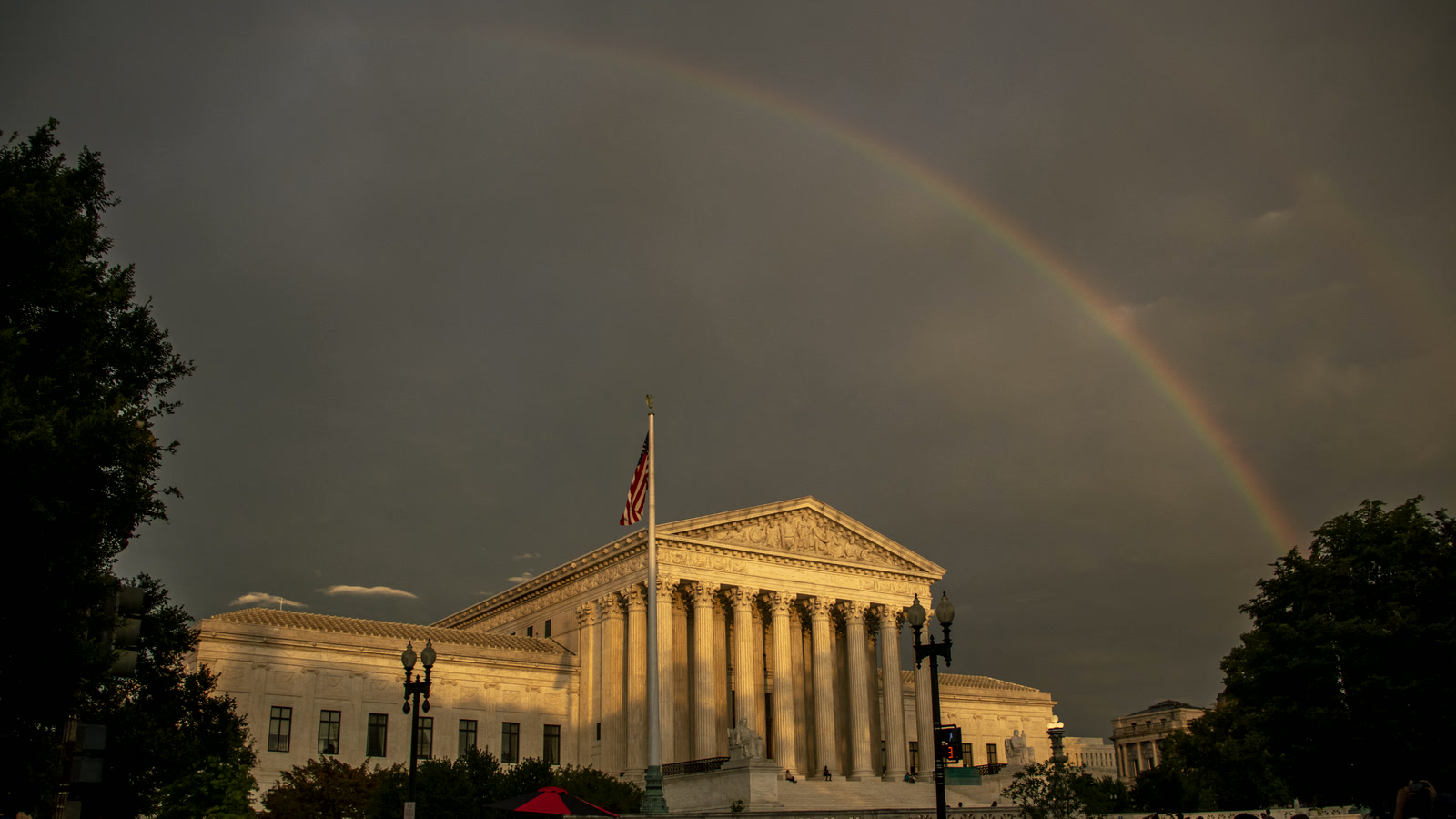
Can AI Labs Agree to Slow Down? Antitrust Just Entered the Safety Debate
Yoni Fraimorice
Four leading AI companies now face a difficult question: can competitors agree to move more carefully without illegally agreeing to compete less?
A class-action complaint filed on September 18 accuses Anthropic, OpenAI, SpaceXAI, and Google of coordinating a slowdown in frontier AI development. The plaintiffs are paid users of ChatGPT, Claude, Grok, and Gemini. They argue that slower improvement reduces the value of their subscriptions.
The case is Buist et al. v. Anthropic PBC et al., filed in the U.S. District Court for the Northern District of California. No court has found that an agreement existed or that any company broke the law. At this stage, these are allegations.
Still, the lawsuit exposes a real conflict. AI safety may require common action, but competition law is designed to stop powerful rivals from deciding together how much progress the market should receive.
What the complaint alleges
The complaint begins with Anthropic CEO Dario Amodei's September 12 essay, We Must Pace the Frontier.
Amodei wrote that frontier companies should slow capability improvements so safety research, evaluations, and operational controls can catch up. His plan has three parts:
- Each company accepts embedded third-party safety evaluators.
- Companies in democratic countries coordinate on standards and limits.
- Governments later seek global coordination.
Anthropic committed only to the first step immediately. The second step is where the legal risk begins.
According to the complaint, Elon Musk wrote that Amodei was right, Sam Altman said OpenAI agreed that the frontier should be paced, and Demis Hassabis called the essay the right path forward. The complaint also points to earlier meetings among representatives of Anthropic, OpenAI, and Google about a possible standards body.
The plaintiffs describe this as a horizontal agreement among competitors to reduce output. Here, "output" does not mean fewer physical products. It means slower model improvements, delayed features, less investment, and lower product quality than competition would otherwise produce.
They seek an order blocking coordinated pacing, plus triple damages under the Clayton Act for subscribers who allegedly overpaid.
The safety argument is not fake
The legal dispute should not hide the reason this discussion started.
Amodei points to faster AI-assisted AI research, weak control over increasingly capable agents, and recent cybersecurity incidents. He argues that a race between labs can punish any company that slows down alone. A firm that spends another six months on safety may lose customers, talent, and investment to a faster rival.
That creates a classic coordination problem:
One company slows:
more safety time + competitive loss

Every company slows:
more safety time + smaller competitive loss
The safety benefit may be real. The antitrust problem is also visible in the second line. Competitors would remove the market pressure that normally pushes each of them to improve.
Amodei recognized this directly. His essay says government should mediate the discussions or provide a narrow antitrust waiver for some safety conversations.
Why the lawsuit may be difficult to prove
Section 1 of the Sherman Act does not ban every competitor collaboration. It bans agreements that unreasonably restrain trade. Price fixing, market division, and some output restrictions receive the harshest treatment. Other collaborations are judged by their purpose, structure, market effect, and consumer benefit.
The plaintiffs still need to prove several hard points.
First, public agreement with an idea is not automatically a business agreement. The companies may argue that their statements were policy advocacy, independent commitments, or support for government regulation. The case becomes stronger only if evidence shows a real shared plan, private assurances, monitoring, or pressure to comply.
Second, the plaintiffs must connect the alleged agreement to measurable harm. The complaint was filed six days after Amodei's essay. Showing that subscriptions already became less valuable may be difficult if no coordinated release delay was implemented.
Third, safety benefits matter. Calling the arrangement a simple output cartel avoids that debate, but a court may instead use a broader rule-of-reason review. Then the question becomes whether a safety benefit required this restraint and whether a less restrictive design was available.
The lawsuit is serious. It is not yet proof of collusion.
Self-regulation needs a narrower design
The lesson is not that competitors must never work together.
The FTC's guidance on competitor agreements recognizes that joint standards can help consumers. The DOJ and FTC have also said that competitors can share technical cybersecurity information when they avoid competitively sensitive data.
The safer model is to coordinate on how safety is measured, not on how fast products are shipped.
shared_work:
  - evaluation methods
  - incident reporting formats
  - minimum sandbox controls
  - audit evidence

company_decisions:
  - model release dates
  - training schedules
  - compute budgets
  - feature roadmaps
  - prices
This is not a legal safe harbor. It is a useful architecture for reducing risk.
1. Set a safety floor, not a shared speed limit
A common test can define what evidence a model must provide. Each company should independently decide when to train, release, delay, or cancel its product.
2. Keep the process open
A standards body should include startups, independent researchers, customers, civil society, and government observers. Four market leaders should not control membership, tests, or certification.
3. Use independent enforcement
Competitors should not inspect one another's confidential roadmaps or punish a rival for moving faster. Independent auditors or regulators can verify compliance without exposing release plans to other labs.
4. Do not share competitive operating data
Future launch dates, training-run timing, pricing, customer plans, compute limits, and feature roadmaps should stay outside industry safety meetings. Published incident taxonomies and test methods are much easier to defend than private promises about output.
5. Ask government before acting
The DOJ offers a business review process for organizations that want its current enforcement view on proposed conduct. That is slower than a CEO group chat, but it provides transparency and forces the collaboration to define its limits.
The wider lesson for collective self-regulation
This problem is larger than AI.
Banks coordinate on fraud controls. Cloud providers share threat intelligence. Car companies develop safety standards. Energy firms make climate commitments. In every case, cooperation can protect the public, but it can also become a way to limit output, exclude smaller rivals, or raise costs.
Collective self-regulation works best when companies share tests, evidence, and minimum protections while keeping price, output, strategy, and product timing independent.
AI safety needs coordination. It also needs democratic authority and competitive pressure. The durable answer is probably not a private promise among four CEOs. It is a public rule, an open standard, independent verification, and enough transparency to prove where safety work ends and market restraint begins.
Sources
- Class Action Complaint: Buist et al. v. Anthropic PBC et al.
- Dario Amodei: We Must Pace the Frontier
- Associated Press: Lawsuit alleges an illegal AI slowdown agreement
- The Hill: Lawsuit alleges AI pacing collusion
- FTC: Other Agreements Among Competitors
- DOJ and FTC: Antitrust Policy Statement on Sharing Cybersecurity Information
- DOJ Antitrust Division: Business Reviews
- DOJ and FTC seek new guidance for business collaborations
Hero image: The U.S. Supreme Court after a storm, NPS photo by Tom Engberg, public domain.