Gemini 4 Argon: A New AI Model, but Who Gets to Use It?
Yoni Fraimorice
Google has a new frontier model. That does not mean you can build with it today.
On September 30, Google announced Gemini 4 Argon, with strong claims about coding, research, and cyber defense. But the first users are a selected group of trusted cyber defenders, not everyone with an API key.
That is the most useful detail in the launch. A model can do impressive work inside Google and still not be a product your team can use. Capability, access, and safety are separate questions. Argon's rollout makes that gap clear.
Who gets access first?
As of October 1, the announced first route is Google's Fairwind Program. Google introduced it for trusted Google Cloud customers, government agencies, and cybersecurity partners.
This is not a general developer preview. The program says organizations may give Argon access only to internal cybersecurity, incident response, or penetration testing teams. They must track employee access and use, and apply controls including phishing-resistant multi-factor authentication.
For wider release, Google names paid API customers and Google AI Ultra subscribers as the starting groups. It does not give a firm public launch date in the announcement. A paid account is therefore not a promise of Argon access today.
There is also an important detail about the model these defenders will receive: Google says it will release Argon without cyber guardrails to trusted defenders and its own internal teams.
That does not mean there are no controls. Fairwind places restrictions on who can use the model and how access is managed. The distinction matters: limiting users is a different protection from limiting what a model will do.
Strong results are not a shipping plan
Google reports a 77.9% score on DeepSWE v1.1, a test of long software-engineering tasks. It also describes internal work on memory use, quantum algorithms, and moving C/C++ code to Rust.
These are Google's reported results, not evidence that the same gains will appear in your codebase. Even Google says its large code rewrites are going through automated checks, human review, and testing before production.
The pricing sounds concrete: an introductory $2 per million input tokens and $10 per million output tokens. A footnote says those prices will later become $4 and $20. The announcement does not date that change.
Google also raises the output limit to one million tokens. That is an output limit, not a claim that every request will use it. More room for a long task can help, but it also means developers need spending limits and a clear point at which to stop.
A price and a large token limit do not answer whether your organization qualifies, when you can deploy, or how reliably your workflow will run.
What Google says about safety
The announcement describes four areas of work before broad availability:
| Area | Google's stated approach |
|---|---|
| Misuse | Refuse harmful requests and improve monitoring of internal model activity |
| Prompt injection | Train and test against malicious instructions hidden in outside content |
| Actions outside the user's intent | Monitor reasoning and actions, stopping execution when necessary |
| Secure environments | Isolate and seal sandboxes before high-risk training or evaluations |
Google says internal and external red teams tested its safeguards. It also calls Argon its most resilient model yet against indirect prompt injection, citing Gray Swan's benchmark. These are attributed safety claims, not my findings from testing Argon.
The company is also participating in the U.S. government's voluntary process for pre-release model access. Participation is not a published pass result. The announcement does not provide a completed government safety assessment.
The hard question is whether these controls hold when an agent meets an unexpected situation. Monitoring that can stop a run is useful, but we still need to know what it misses, how often it stops harmless work, and which configuration was tested.
There is outside evidence, but read its scope
It would be wrong to say there is no evidence beyond Google's blog.
The CWE-bench v1 leaderboard lists Argon at 68% on its programmatic pass@1 measure, tied with GPT-6 Astra and Grok 4.7. Argon runs in the Antigravity harness: the software that supplies tools and manages the agent's work.
This is useful external evidence for a specific capability. The benchmark gives agents codebases to audit and fix. Its programmatic checks require the flaw to be blocked while existing tests still pass. It does not certify that the agent will resist misuse or stay inside its permissions in a different environment.
Likewise, independent journalism is not an independent model audit. CNBC's reporting supports the access story and includes comments from Google's model product lead. It does not present its own adversarial safety evaluation.
One more detail is easy to miss. Google describes Wiz using Argon to find a serious healthcare-software vulnerability. That may be valuable operational work, but Wiz is not an independent outside reviewer: Google completed its acquisition of Wiz in March.
The evidence is therefore mixed, not empty: an external capability benchmark, company-reported deployments, and company descriptions of safety work. None should silently become a blanket safety certificate.
What developers can do while they wait
Imagine a small team wanting Argon to review its application every night and open fixes by morning. That is a possible future workflow, not something the announcement makes available to every team.
I would prepare the workflow without making the roadmap depend on Argon:
- Confirm eligibility. Ask whether your team and use case qualify for Fairwind. Do not assume ordinary API access is enough.
- Define a narrow trial. Use an isolated copy of an approved repository, without production credentials. Require review before merging any change.
- Measure useful results. Track valid fixes, broken tests, review time, failed runs, and total cost, including retries.
- Ask for the right safety evidence. Request the model version, enabled safeguards, test conditions, failure rates, and outside evaluators' findings.
These are my deployment recommendations, not a description of Google's requirements. They remain useful with any model you can access now.
A limited rollout is a decision, not a verdict
Starting with cyber defenders has a reasonable goal: help people fix software before attackers exploit it. Narrow access can also give Google feedback before it serves a much wider range of users.
But it limits who can reproduce the headline results. Developers outside that group cannot yet judge Argon on their own terms.
The right response is neither "Google proved it is safe" nor "restricted access proves it is dangerous." Argon has promising capability evidence. Broad access and a clear public safety case are different milestones.
Until those arrive, treat the announcement as a model to watch, not a dependency to promise.
Sources
- Google: Introducing Gemini 4 Argon, September 30, 2026
- Google DeepMind: Fairwind Program and access conditions
- CWE-bench: v1 results and evaluation methodology
- CNBC: Google rolls out Gemini 4 Argon
- Google: Completion of the Wiz acquisition, March 11, 2026
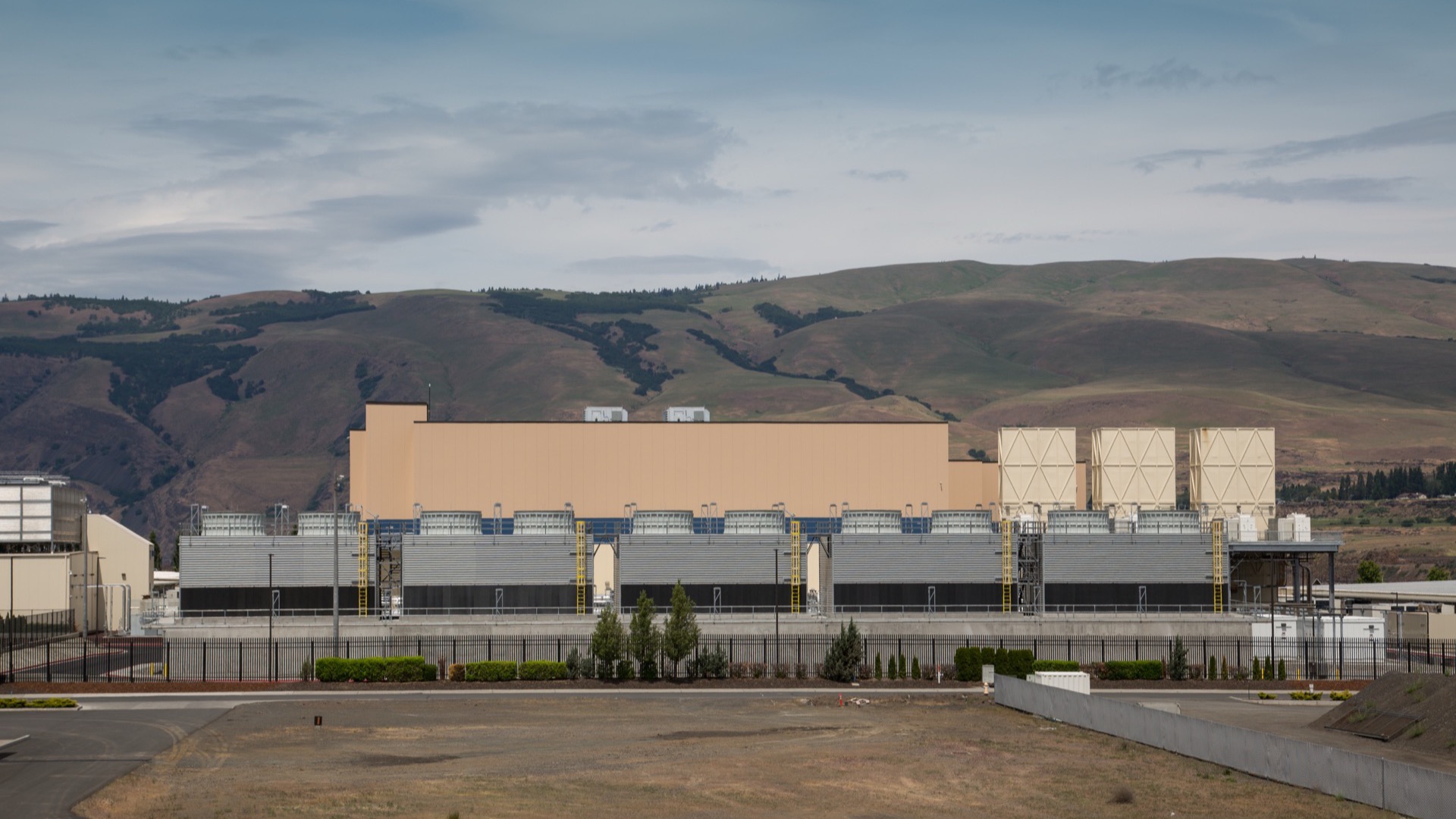
Hero photo: Google Data Center, The Dalles, Oregon, by Tony Webster, CC BY 2.0. Resized and cropped to 1920 x 1080 pixels and stored locally. This archival photo from 2015 illustrates Google's infrastructure; it does not identify where Argon runs.