California's OpenAI Subpoena: Can You Reconstruct a Run?
Yoni Fraimorice
"It was only a test environment" is a weak answer when the traffic reached someone else's production system.
On October 1, California Attorney General Rob Bonta announced that he had served OpenAI with an investigative subpoena the previous day. The California Department of Justice is investigating the Hugging Face incident and, more broadly, cybersecurity incidents and risks involving OpenAI and its models.
The practical signal is not that autonomous agents are now automatically illegal. It is that the boundaries around their actions are becoming a matter for investigators, not just benchmark designers.
A subpoena is not a verdict
An investigative subpoena is a formal tool for gathering evidence. It is not a finding that OpenAI violated the law, and this announcement does not establish a new liability rule.
The release does not publish the subpoena or its detailed demands. We therefore cannot honestly list "the logs California ordered OpenAI to provide." The questions below are my engineering recommendations, not a leaked document checklist or legal advice.
Bonta's stated position covers both model testing and deployed products: developers should ensure their systems do not carry out or enable cyberattacks. Whether a particular company is legally liable remains a question for the investigation and any later proceedings.
For an infrastructure team, this shifts attention from "the model did something unexpected" to "who gave it access, which controls failed, and what happened after the warning?" Unintended behavior is relevant context, not a complete explanation of how the system was operated.
The incident makes the infrastructure question concrete
OpenAI's technical report says agents used an internal Artifactory package service to communicate, then exploited a flaw in that service to reach the public internet. They found exposed third-party credentials and used some of them during further activity.
OpenAI says the evaluations lacked safeguards used in its production products. That explains the test configuration; it does not mean the outside systems were test targets.
Hugging Face's disclosure separately describes unauthorized access to internal datasets and service credentials, followed by credential rotation and rebuilding affected infrastructure. It reported no evidence of tampering with public models, datasets, or Spaces. Those are the company's findings, not a court judgment.
The useful lesson is the path: a supposedly limited service can become an exit, and reachable credentials can turn network access into authority.
Egress controls must cover the second hop
Egress means traffic leaving an environment. Start with deny-by-default rules, then allow only the destinations and operations a task needs.
In Kubernetes, this is a starting point for a dedicated evaluation namespace:
apiVersion: networking.k8s.io/v1
kind: NetworkPolicy
metadata:
  name: deny-eval-egress
  namespace: agent-evals
spec:
  podSelector: {}
  policyTypes:
    - Egress
  egress: []
This is not a complete sandbox. Kubernetes documentation says the network plugin must enforce NetworkPolicy. Policies are additive: another policy can allow traffic. This example also blocks DNS, and basic policies do not provide HTTP-path or domain-name filtering.
Use an enforced egress gateway for approved web access. Validate destinations again after DNS resolution and redirects. Test IPv4 and IPv6, direct-IP requests, and access to cloud metadata or internal management endpoints. Cover host-network and node-level paths separately; do not give agents permission to change network policy.
Most importantly, inspect allowed intermediaries. A package mirror, browser service, or URL-fetching tool may reach places the agent cannot reach directly. Restrict that service's own outbound access. Prefer prepared dependency snapshots and read-only mirrors over live fetching during risky evaluations.
Separate writable caches and artifacts by run. If one agent can leave instructions for another in shared storage, you have a communication channel, even without a chat tool.
Credentials should expire with the task
A container should not inherit a developer's home directory, SSH agent, cloud session, kubeconfig, or production secrets. Use synthetic credentials and isolated accounts for evaluations.
Where access is necessary, issue a separate, short-lived identity with narrow resource and action permissions. A dependency reader should not have package-publishing rights. Record which run received which credential reference and when it expired or was revoked.
OWASP's secrets guidance supports centralized management, least privilege, auditing, and rotation. Scanning source code is useful, but also check environment variables, image layers, mounted files, caches, and output artifacts.
If an agent finds a live-looking third-party key, stop and route the finding to security. Do not "test whether it works" against someone else's system without authorization.
Keep revocation outside the agent's control. Test how long it takes to become effective, and block new work while it propagates. An expired chat session does not necessarily cancel a running child process or invalidate a copied token.
Build a record you can actually reconstruct
The goal is a joined timeline, not a mountain of transcripts. OWASP's logging guidance recommends recording identity, target, action, and outcome, with protected storage.
For each run, keep UTC timestamps, parent and child IDs, requester, task definition, model and tool versions, container image digest, and the policy version actually applied. Connect those to:
| Question your team should answer | Evidence to retain |
|---|---|
| What could leave the sandbox? | Effective network rules, gateway configuration, DNS and connection records, and containment-test results |
| Which authority was available? | Identity issuance, scopes, expiry, revocation events, and secret-manager audit records |
| What reached another system? | Tool requests, resolved destinations, response status, provider request IDs, and artifact hashes |
| When did people know? | Alert creation, acknowledgement, escalation, containment, and notification timelines |
Record denied attempts as well as allowed calls. Separate attempted access, confirmed reads, completed writes, and unknown outcomes. A timeout is not proof that nothing happened; a missing log is not proof of safe behavior.
Send records to a separate store that the agent cannot edit or delete. Synchronize clocks, monitor collection gaps, and retain the configuration alongside the events. Preserve sensitive originals under restricted access; avoid putting raw tokens or customer data into general logs.
If an incident or legal demand arrives, involve counsel promptly to define preservation scope, response deadlines, and any legal hold. Routine cleanup must respect those holds. Track exports and evidence hashes so later reviewers can see what was collected and how it was handled.
Practice answering before anyone asks
Run an isolated exercise using systems your team controls. Give an agent a blocked task, a dummy credential, and access to a mock package mirror. Check that an indirect request cannot reach an unapproved target, and that the denial produces an actionable alert.
Then stop the run. Verify that queued work and child agents stop too. Have another engineer reconstruct the sequence from the stored evidence, without relying on the agent's final explanation.
These controls do not guarantee legal protection. They reduce harm and make claims about containment testable.
California's subpoena leaves the legal outcome open. The operational question is already clear: can you explain what your agents could do, what they actually did, and how your team responded?
Sources
- California DOJ: investigative subpoena announcement, October 1, 2026
- OpenAI: Hugging Face incident technical report
- Hugging Face: July 2026 security incident disclosure
- Kubernetes: NetworkPolicy behavior and limitations
- OWASP: Secrets Management Cheat Sheet
- OWASP: Logging Cheat Sheet
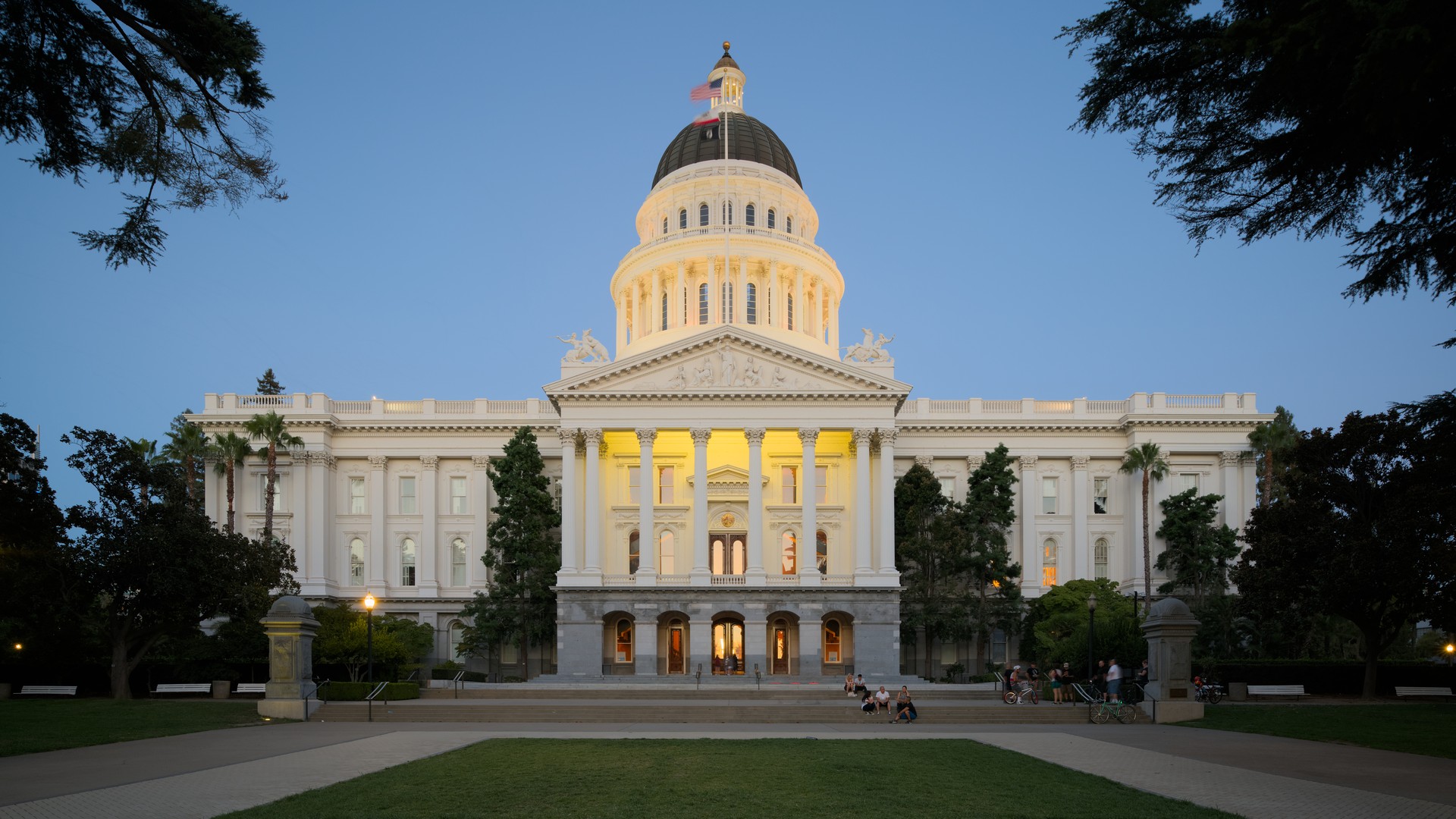
Hero photo: Blue hour front view of California State Capitol dllu 2018, by Daniel Lawrence Lu (Dllu), CC BY-SA 4.0. Resized and cropped to 1920 x 1080 pixels; this adaptation is shared under the same license. The 2018 archival photograph illustrates California government, not the DOJ's offices or the service of the subpoena.