Japan Wants to Give Its AI Law Teeth
Yoni Fraimorice
What happens when a law built to promote AI meets a growing security problem? Japan is considering an answer: keep encouraging the technology, but give the government a way to enforce safety duties on its most advanced providers.
A government AI strategy panel has outlined a draft amendment to Japan's 2025 AI Promotion Act. The proposal includes measures against AI-enabled cyberattacks, reporting of serious incidents, and powers to recommend changes, issue orders and eventually punish businesses that ignore those orders, The Japan Times reports.
This is a draft outline, not an enacted amendment. The report says the government aims to finalize a bill early and submit it to parliament. A separate account relaying Yomiuri reporting points to the ordinary Diet session next year, but that timing is not confirmed. No bill has been submitted or passed yet.
From promotion to enforcement
Japan's AI Promotion Act passed on May 28, 2025 and took full effect on September 1. Its main goal is to encourage AI use. It allows the government to investigate providers and give guidance, but relies on cooperation rather than penalties. The Japan Times describes that authority as weak.
The proposed change comes as cyberattacks using rapidly developing AI are increasing. That does not mean every major cyberattack involved AI. An October ransomware attack on cloud provider IDC Frontier added urgency to the debate, according to Tech Times, but the available reporting does not establish that AI guided that intrusion.
The policy question is different from whether AI is useful. A provider can offer a valuable tool and still need controls against serious misuse. The draft asks whether voluntary promises are enough when those controls fail.
What providers could have to do
The outline seen on November 27 would require providers of advanced AI services to take measures to prevent cyberattacks, and AI operators to report serious AI-related incidents to the government. The Japan Times says the measure was apparently drawn up with OpenAI and Anthropic in mind; that is the report's hedge, not a confirmed statement of the drafters' intent.
Nikkei Asia reports that companies with inadequate safeguards could face on-site inspections. Its headline deck says foreign developers, including OpenAI and Anthropic, would also be subject to the requirements.
There are more specific reported duties, but their source matters. Tech Times attributes identity verification for users of cyber-capable models, refusal of attack-related queries, and reporting safety defects to a Yomiuri Shimbun report relayed by Korean outlets. It says the user-verification and defect-reporting duties come from that reporting alone; the Cabinet Office outline itself does not address user verification. These details should not be treated as independently confirmed provisions of a final bill.
Serious-incident reporting and the reported duty to report safety defects are not necessarily the same thing. The excerpts do not define their precise thresholds or explain how they would overlap.
A ladder, not an instant fine
According to the Yomiuri report as relayed by Tech Times, enforcement would have three steps:
- The government makes a recommendation.
- It can issue a corrective order.
- A penalty applies only if the provider defies that order.
Under this description, a provider that follows the recommendation faces no sanction through this ladder. An inadequate safeguard would not automatically mean an immediate fine. The Japan Times separately reports recommendation, order and punishment powers, with punishment for businesses that do not obey orders.
That sequence matters in practice. A company could be told to fix a problem before a binding order and penalty are involved. But the excerpts do not specify the penalty amount, deadlines or appeal process, so those details remain open.
Who is in scope?
Tech Times says the Cabinet Office outline would cover foreign providers if their services are used in Japan to a certain extent. The reported duties would fall mainly on upstream model providers, rather than downstream companies that build products on their models. The Yomiuri relay similarly refers to companies with a certain number of users in Japan; the excerpts do not give a precise threshold.
Think of a hosted model provider and a local company building an assistant on top of its API. The reported approach places the main duties upstream, where the model and its service are controlled. It does not tell us that downstream companies have no other responsibilities, or exactly how every service would be classified.
Identity checks would also change the user experience if that reported duty enters the bill. A security researcher and an attacker may both ask a model about a vulnerability. Verification could help a provider control access, but it would also mean less anonymous access for legitimate users. Existing voluntary programs already use verification for some cyber work; a legal duty would be a different kind of commitment.
The open-weight question
The reporting is silent on open-weight models: models whose weights can be downloaded and run on private hardware. A hosted service can check a user's identity and refuse a request at its own interface. A downloaded model can be operated without going through that interface.
That difference makes the scope important, but it does not tell us what Japan will decide. Whether the amendment would address open-weight models is unknown.
The wider shift
Japan's proposal fits a broader discussion about moving from voluntary AI safety commitments toward binding obligations. The practical test is not only whether rules exist, but who must act, what triggers reporting and how a regulator can check compliance.
For now, the line between proposal and law is essential. The outline shows momentum toward enforceable AI safety duties; it does not yet settle the final text, timing or treatment of open weights. The next step is a bill, not an automatic penalty for every safety failure.
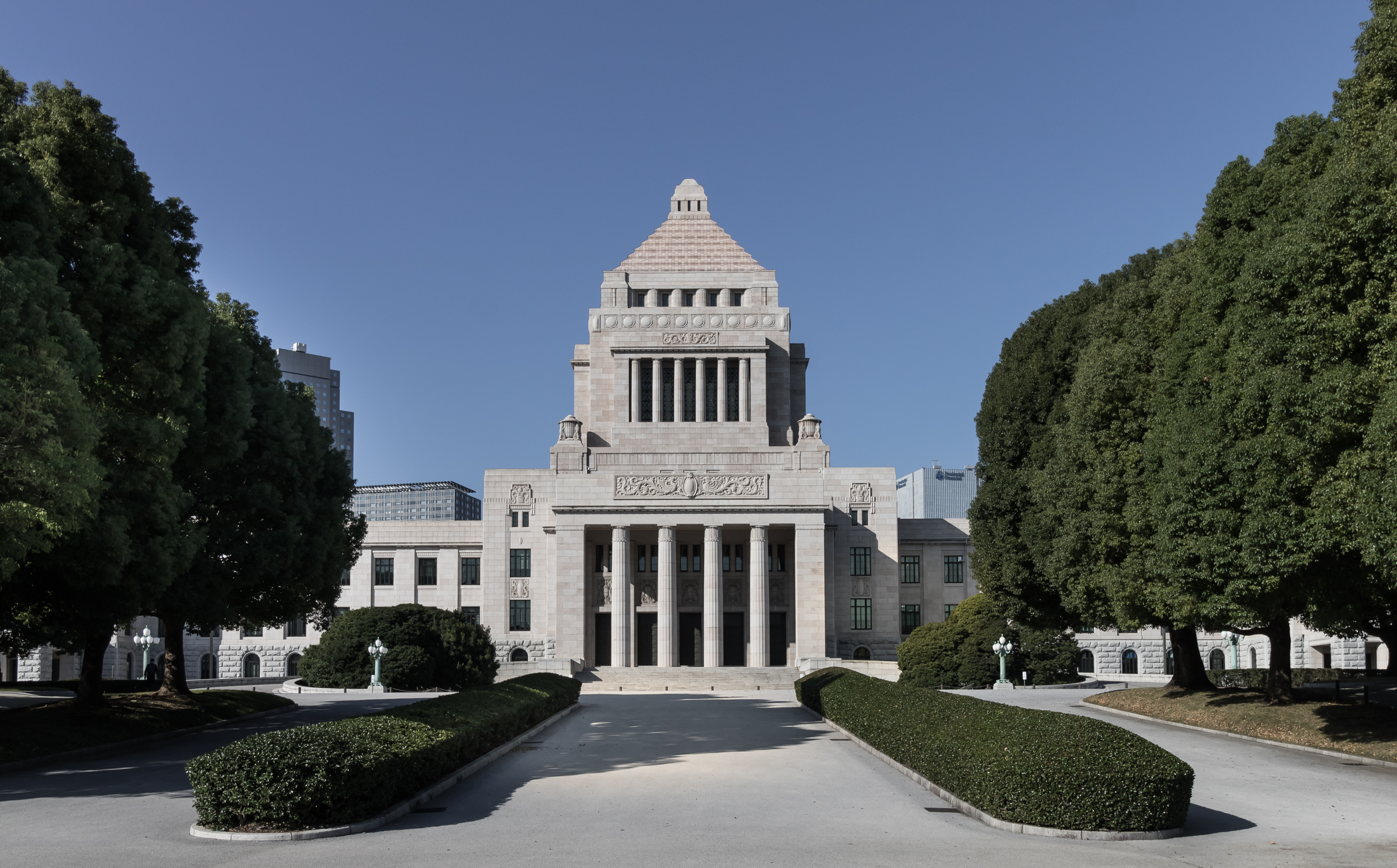
Hero image: National Diet Building, by Kakidai, CC BY-SA 4.0. Illustrative photograph of Japan's parliament; original and final dimensions: 2500 × 1554 pixels. No changes made.
Discussion
One discussion for the English and Hebrew editions.
Loading comments...